
Why We Can't Just Go Away
Updated: Oct 30, 2025
And how the life that generations have created, keeps living.

We've been asked - sometimes gently, often not - why we don't just stop. Give up. Move on. Find something easier. Something that doesn't attract ordinances and hearings and the kind of attention that comes with torches instead of questions.
The answer is simple, even if it's hard to understand: We were born this way.
Not born to compost, exactly - though that's what we do. Born to see what others call finished and know it's just beginning. Born to look at what the world discards and see what it's becoming. Born with eyes that can't help but notice the resurrection hiding in every pile of what-was, waiting to become what-will-be. Dying in order to live again.
This isn't a business decision we made one Tuesday morning. This is who we are. It's as fundamental as the worms that can't help but turn waste into richness, as the fungi that can't stop breaking down the forest floor into the very ground that feeds the trees. You can't ask water not to flow downhill. You can't ask us not to see the life in what looks like death.
What We Do

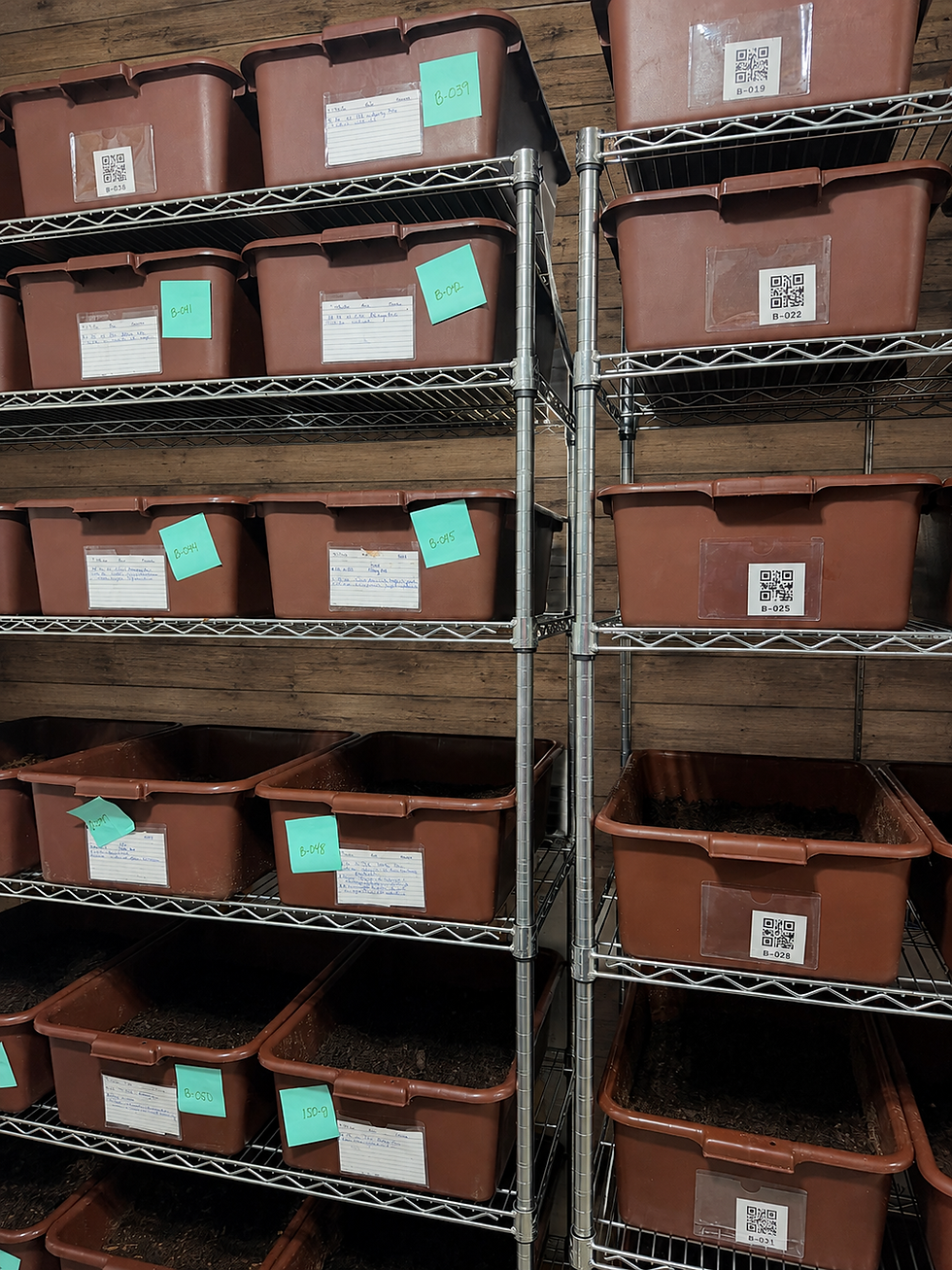
We take manure and vegetative waste - the things people want gone, the inconvenient remainders of living - and we let them become what they were always meant to be. We turn piles. We watch the worms work out their ancient and purposeful duty. We wait while bacteria and amoebas and a thousand invisible workers do what they've done since the beginning: transforming death into life.
The dirt that comes out the other side - dark, rich, alive with possibility - goes to farms, nurseries, soil makers and baggers, to community gardens where children dip their hands in and learn what it means to grow something. To eat something they grew. To feed. To nourish. To understand that nothing is ever really finished, just changing form.
We take the same fallen tree that stood a thousand years beside a river and we shape it into a dining table that will live another thousand years while generations gather around it. Laughter and tears and prayers and all of life's moments, ready to be lived on and around it, passed down, the aliveness, the messiness of humanity, never stopping, just changing shape.
This is the truest farm-to-table there is: the cycle that doesn't quit, the life that keeps living.
What's Happening
The county has passed an ordinance targeting what we do. We've been brought before the special magistrate. Our constitutional rights have been trampled. We've faced a coordinated campaign of harassment - fake profiles, name-calling, people who've never met us declaring what we should do with our lives. We've been told we're a nuisance. A problem. Something to be eliminated.
We've spent months in hearings arguing points that were dismissed as "irrelevant" before fines started piling up. The message is clear: Just go away.

Why We Can't
Because you can't turn off what you are.
You can't stop the curiosity that sees a thriving ecosystem underground. You can't halt the impulse that looks at waste and wonders what it could feed. You can't silence the part of you that knows - bone-deep, beyond argument - that renewal and reimagining and resurrection aren't just pretty words, they're the way the world actually works when you let it.
This is how we worship. This is how we pray. Every pile turned is hands lifted high. Every batch of dark, living soil is a hallelujah. Every table we have ever made is living scripture pressed between boards - a testament that life doesn't stop, it transforms.
When we do this work, we don't feel special. We feel aligned. We feel like we're doing what we were made for, what the worms were made for, what the whole beautiful cycle of death-becoming-life was made for.
What They Can't Stop
Here's what matters: Even if they make us stop tomorrow, the transformation has already happened.
The dirt we've made is already feeding gardens. The tables we've built are already gathering families we'll never meet. The children who've touched that soil and learned something about life continuing - that knowledge lives in them now. The trees growing from what we've given back to the earth - those keep growing.
The life we've participated in keeps living.
You can write ordinances, but you can't legislate away the fundamental way the world renews itself. You can fine us, but you can't stop what's already growing. You can try to silence us, but the work speaks for itself - in every garden, every table, every handful of dark earth that used to be waste.
Moving Forward

We're appealing. We believe we'll win because state law is on our side, because the constitution matters, because what we do isn't just legal - it's necessary.
But win or lose this particular battle, we want you to understand: We're not going away. Not because we're stubborn, though we might be that too. But because this is who we are. This is what we see. This is what we know to be true about the world - that it's full of resurrection, if you have eyes to see it. All of nature lives it out over and over, season after season, in worship, in obedience.
We see it. We can't unsee it. We can't stop participating in it.
And neither can you, really. Every time you eat something grown in living soil, every time you gather around a table, every time you watch something grow from what looked like nothing - you're part of this cycle too.
We're just refusing to pretend otherwise.
The renewal continues. The reimagining goes on. The resurrection keeps happening, right under our feet, in our hands, in the work we do and the life we live.
That's not something that can be legislated away.
That's grace. Sweet sounding, freedom found, amazing grace.
Take a Stand With Us
This is our fight, but it's not ours alone. It's a stand for every farmer, creator, and regenerator.
You can support our legal battle by shopping our Underground Organics merch. Every purchase directly funds our fight for agricultural rights and will help build a fund for other farmers facing the same overreach.


CREED: Regenerative Farming is Creed.
Unlawful discrimination based on creed remains prohibited under existing civil rights laws in the United States. Recent executive orders have focused on ending certain diversity and inclusion initiatives but do not change the fundamental protections against discrimination based on creed or religion.
.
GPT-4o mini
Legal Definition of Creed
In legal contexts, creed refers to a set of beliefs or principles that guide an individual's actions and decisions. It is most often associated with religious beliefs but can also encompass philosophical or moral beliefs.
Key Aspects of the Definition:
Religious Context: Traditionally, creed is associated with organized religions, describing core tenets or doctrines.
Broader Applicability: In legal terms, creed may also include non-religious belief systems, allowing…